There’s a version of fitness that peaks in your thirties and spends the next few decades slowly unwinding. Most people are familiar with it. The knees that start complaining, the flexibility that slowly disappears and the energy levels that require more and more effort to maintain.
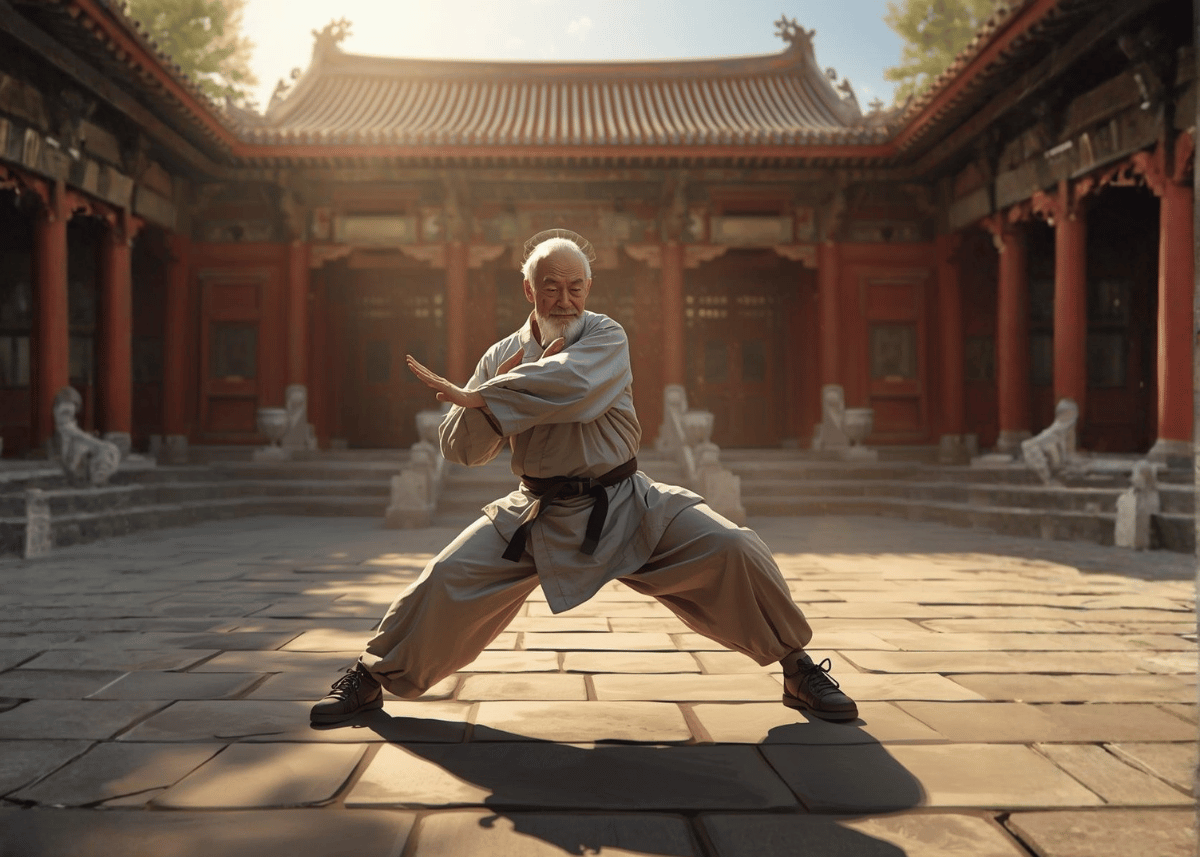
And then there are the Kung Fu masters. Still moving fluidly in their seventies.
That isn’t luck, and it isn’t genetics. These arts were designed this way — to build the body for longevity, not just performance.
A system built for the long game
The founders of traditional Chinese martial arts understood something that modern fitness culture is only beginning to catch up with: the body isn’t a machine to be optimised for performance. It’s a living system that needs to be cultivated, balanced, and sustained over a lifetime.
The Shaolin monks who developed many of these practices weren’t just training to fight. They were training to remain capable, healthy, and vital for as long as possible. Their Qigong systems, their forms, their breathing practices, all of these were developed with longevity as a central goal alongside martial effectiveness. The two were never seen as separate.
Joint health and structural resilience
One of the most significant ways traditional martial arts support longevity is through the conditioning of joints, tendons, and connective tissue, the parts of the body that conventional fitness training tends to neglect.
Sinew Qigong, rooted in the ancient Yi Jin Jing (Muscle-Tendon Transformation), directly addresses this. The 12 classical movements use dynamic internal tension to strengthen the tendons and condition the connective tissue in a way that supports joint health and prevents the kind of structural breakdown that sidelines so many people as they age. Practitioners who train this system consistently tend to maintain mobility, strength, and physical resilience well into later life, not because they’re fighting the ageing process, but because they’ve been building a body that ages well from the inside out.
Energy cultivation and the nervous system
Longevity isn’t just about the body’s physical structure, it’s about energy. The quality of vitality you carry through your days and the resilience of your nervous system under pressure.
This is where Lohan Qigong becomes particularly relevant. The practice works directly with the body’s energy channels, activating and circulating Qi to revitalise the organs, calm the nervous system, and restore the kind of deep energetic balance that chronic stress erodes over time. Practitioners consistently describe sleeping better, feeling more genuinely rested, and experiencing a steadiness of energy that doesn’t depend on stimulants or adrenaline.
Traditional Chinese medicine has understood for thousands of years that the quality of Qi flow in the body is directly related to health and longevity. These practices are the applied expression of that understanding.
The mind matters too
Longevity in the traditional martial arts sense isn’t only physical. The mental qualities that training develops, focus, patience, discipline, the ability to stay present under pressure, are just as central to a long and well-lived life as physical health.
Training Kung Fu or Tai Chi consistently cultivates a particular quality of mind. It asks you to show up, pay attention, and engage fully with what you’re doing. Over years and decades, this creates a mental resilience and clarity that carries into every other area of life. The masters who are still training into old age aren’t just physically well, they’re grounded in a practice that continues to reveal new layers the longer they stay with it.
A practice for every stage of life
One of the most beautiful things about this tradition is that it genuinely is for everyone, at every age and stage. A 21 year-old building explosive martial power and a 60 year-old restoring joint health and energy are both doing something deeply valuable, and both are working within the same system of principles.
You don’t need to have started young and you don’t need a particular level of fitness or flexibility. You just need to begin, and then keep going. The arts will meet you wherever you are and grow with you from there.
That’s what longevity looks like in practice. Not the absence of ageing, but a body and mind that are genuinely well cared for, for the long haul.
