
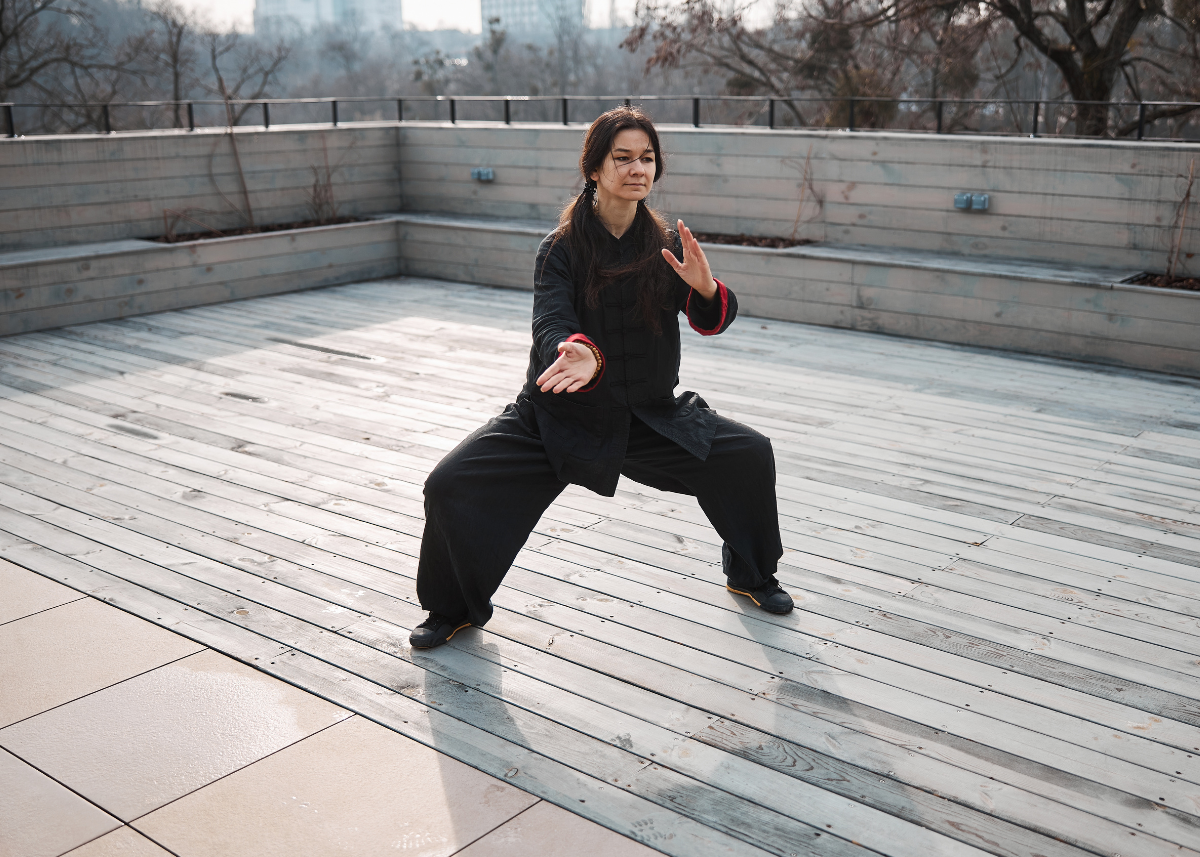
There’s a version of martial arts training that looks impressive from the outside. High intensity, long sessions, and a relentless focus on doing going harder and pushing through. But somewhere along the way, for a lot of practitioners, the progress stalls. Either the body starts accumulating wear, or the motivation that felt so strong in the early months gets harder to sustain. And the question that follows is usually ‘what am I doing wrong?’ rather than ‘how am I training?’
The answer, more often than not, lives in the second question.
Mistaking activity for progress
The most common training mistake isn’t laziness. It’s the belief that more effort automatically produces more improvement. But that doesn’t quite map onto how the body actually learns.
Physical skill develops through repetition of correct patterns – the emphasis being on correct. Intensity amplifies whatever pattern you’re repeating, which means training hard with poor structure doesn’t build good technique faster, it builds poor technique more deeply.
The body encodes what it practises, not what it intends to practise. A thousand repetitions of a sloppy technique don’t eventually become a clean one. They become a deeply ingrained sloppy one.
This is why traditional martial arts have always placed such a high value on slowing down. It’s where the body actually has time to feel what it’s doing, correct what’s wrong, and encode the right pattern. Speed and power come later, built on top of a foundation of genuine structural precision. Try to add them before that foundation exists and you get something that looks fast but doesn’t actually work.
Training the shape instead of the principle
A closely related mistake is learning the external shape of a technique without understanding the principle underneath it. This is particularly easy to do when learning from video, which shows you what a movement looks like but can’t always convey what it feels like from the inside or what it’s actually trying to accomplish.
Every technique in a traditional Kung Fu or Tai Chi form exists for a reason. The angle of a stance, the path of a strike, the timing of a breath, all of these carry specific martial logic. This is one of the reasons the online courses at the Chinese Kung Fu and Tai Chi Academy include application breakdowns alongside form instruction. Understanding what a movement does and why changes how the body performs it. The principle, once understood, corrects the technique in ways that external instruction alone often can’t.
Ignoring the internal
Perhaps the most significant gap in how most people approach martial arts training is the neglect of the internal dimension, the breath, the structural connection, the development of Qi and whole-body integrated power that distinguishes traditional Chinese martial arts from purely physical training systems.
It’s easy to skip this layer. It’s less visible, less immediately satisfying, and harder to measure than physical output. But it’s the layer that determines the quality of everything else. A practitioner who trains the external movements without the internal principles develops technique that works mechanically but lacks the depth and power that genuine martial skill produces.
The practices designed to develop this internal dimension, Qigong, standing meditation, silk-reeling, Dantian breathing, aren’t separate from the martial training. They’re the foundation of it. Practitioners who include them consistently describe a shift in their movement that technique work alone never produced.
Inconsistency disguised as intensity
Another pattern that holds practitioners back is substituting occasional intensity for regular consistency. A three-hour session once a week feels like serious training, but the body doesn’t build skill through occasional large inputs, it builds skill through frequent, regular repetition.
A practitioner who trains for thirty minutes every day develops movement patterns that a practitioner who trains for three hours once a week simply doesn’t, even though the weekly volume looks similar. Frequency is the mechanism through which skill becomes automatic. And automatic is what you need when it matters.
The accessibility of online training makes this kind of consistency genuinely achievable. There’s no commute, no fixed class time, no reason to skip because life got in the way. Your practice is available whenever you are, which removes the most common barrier between intention and follow-through.
What training the right way actually looks like
It looks like slowing down to feel what you’re doing before adding speed, asking what each movement is for before drilling it endlessly and including breath work and internal practice alongside your technique (rather than treating them as optional extras). It also looks like showing up regularly, even when you don’t feel inspired. Because consistency is how the practice actually gets into the body.
Traditional martial arts have understood all of this for centuries. The reason the arts have endured is that they work, when practised correctly, for anyone willing to approach them with patience, attention, and genuine commitment.
The courses at the Chinese Kung Fu and Tai Chi Academy are built around exactly these principles, teaching not just what to do but how to do it in a way that produces real, lasting development. Start training the right way here.
