‘Is it too late for me to learn?’
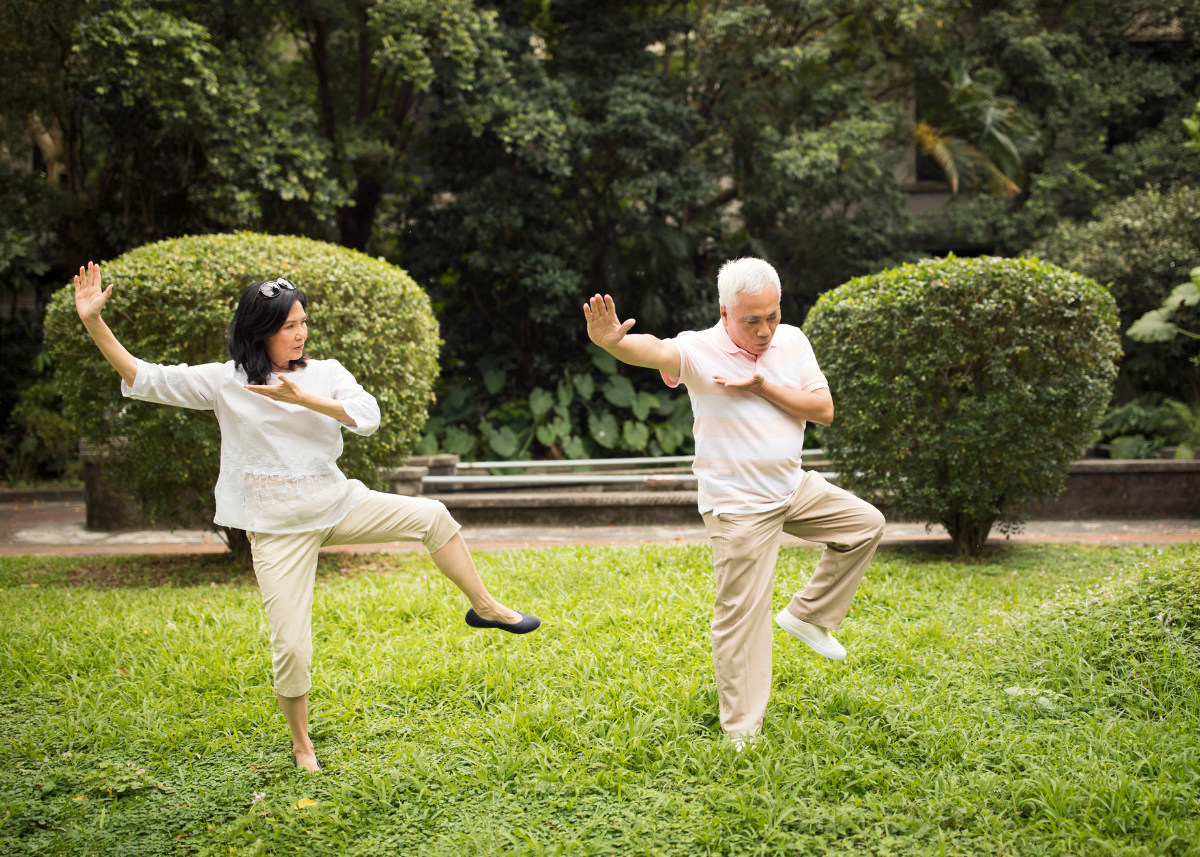
This is a question many people ask when they begin training kung fu or tai chi for adults. The honest answer? Traditional Chinese martial arts is one of the physical disciplines that genuinely rewards you more the longer you stay with them. Not because they get easier, but because of what they develop in you.
What makes these arts different
Most athletic pursuits depend on physical attributes that peak in the 20’s and 30’s: raw speed, explosive power, recovery time, joint resilience. A former sprinter or gymnast knows exactly what it feels like when the body begins to work against the demands of their sport. The arts that depend primarily on those qualities have a natural ceiling, and most people eventually bump their head on it.
Traditional kung fu and tai chi have a very different logic. The internal dimensions of these arts, the cultivation of Qi, the development of refined structural power, the deepening of body awareness and timing, these compound over years and decades in a way that raw athleticism does not. A master in their sixties who has trained consistently for forty years does not simply have more knowledge than a student in their twenties. They move differently, generate force differently, and understand the art at a level of depth that cannot be shortcut by physical gifts.
Kong On, one of the great masters in the Buk Sing Choy Lay Fut lineage and one of Grandmaster Tarm Sarm’s six top disciples, mastered not only the full range of weaponry and fighting arts across his lifetime, but also the hard and soft internal Qigong, Golden Bell iron body development, Chinese medicine, and bone setting. His son Kong Hing, himself one of the highest-ranking Buk Sing masters of his era, maintained the kind of power and technical mastery that made Sifu George Michielsen describe watching him strike as like watching a tiger attack. Both of these men represent the product of lifelong training, rather than being constrained by age.
What adults actually find when they start
Many people start kung fu and tai chi for adults expecting to be at a disadvantage compared to younger students. But adults tend to bring an understanding that meaningful things take time. This is not a minor advantage, it’s central to what traditional training actually demands of a person.
One long-term student of the Academy captured it simply: the foundation of Buk Sing Choy Lay Fut has given them the body awareness to keep fit in a way that suits the body as it ages, whilst keeping the mind young. Another student began training in tai chi specifically because of a back problem. More than ten years later she was still training, still teaching others, and adding the straight sword to her practice. This is what traditional practice looks like when people commit to it across time.
The internal arts and what they offer as you get older
Within the broader world of kung fu and tai chi for adults, the internal arts stand out for a particular quality: they don’t require you to fight against your body’s changing capacities, but to work with them more intelligently. Chen Tai Chi, the original and most dynamic form of tai chi rooted in the traditions of Chen Village, blends softness with explosive power in a way that strengthens joints, improves posture, and develops full-body coordination without the high-impact strain that wears on ageing bodies in other disciplines. The longer you train it, the more it reveals. It is genuinely a lifelong art in the truest sense of that phrase.
The same is true of Lohan Qigong, the Shaolin system that builds internal energy, vitality, and structural resilience through breath, movement, and standing meditation. This practice does not have a ceiling. Practitioners in their 70’s and 80’s continue to deepen within it, finding new layers of understanding that younger students simply have not yet had the time to reach. Sinew Qigong, the Shaolin muscle-tendon transformation system, builds tendon strength and joint health in ways that become more valuable, not less, as the body ages.
The question of where to start
For adults wondering where to begin, the answer is simpler than most people expect. You start where everyone starts, with the fundamentals and basic principles that everything else builds from. The fact that you are starting at 40 or 50 rather than 15 doesn’t change what those fundamentals are, or what they develop in you over time. It changes the context, not the direction.
Sifu George Michielsen began his training at 17 and is still training decades later, still deepening, still learning, still carrying forward a lineage that he received from masters who spent their entire lives doing the same. That continuity s what these arts are designed to produce in the people who commit to them.
So the question is not whether it’s too late to start, it’s whether you’re ready to begin something that will reward you for the rest of your life.
Start your practice from anywhere in the world
Our online courses bring the full depth of this lineage to you directly, wherever you are and whatever your starting point. Whether you want to begin with Buk Sing Choy Lay Fut, explore Chen Tai Chi, or develop your internal foundation through Lohan or Sinew Qigong, every course is taught by Sifu George and built to grow with you across years, not just weeks. Browse our courses and find where your practice begins. Explore our courses
