
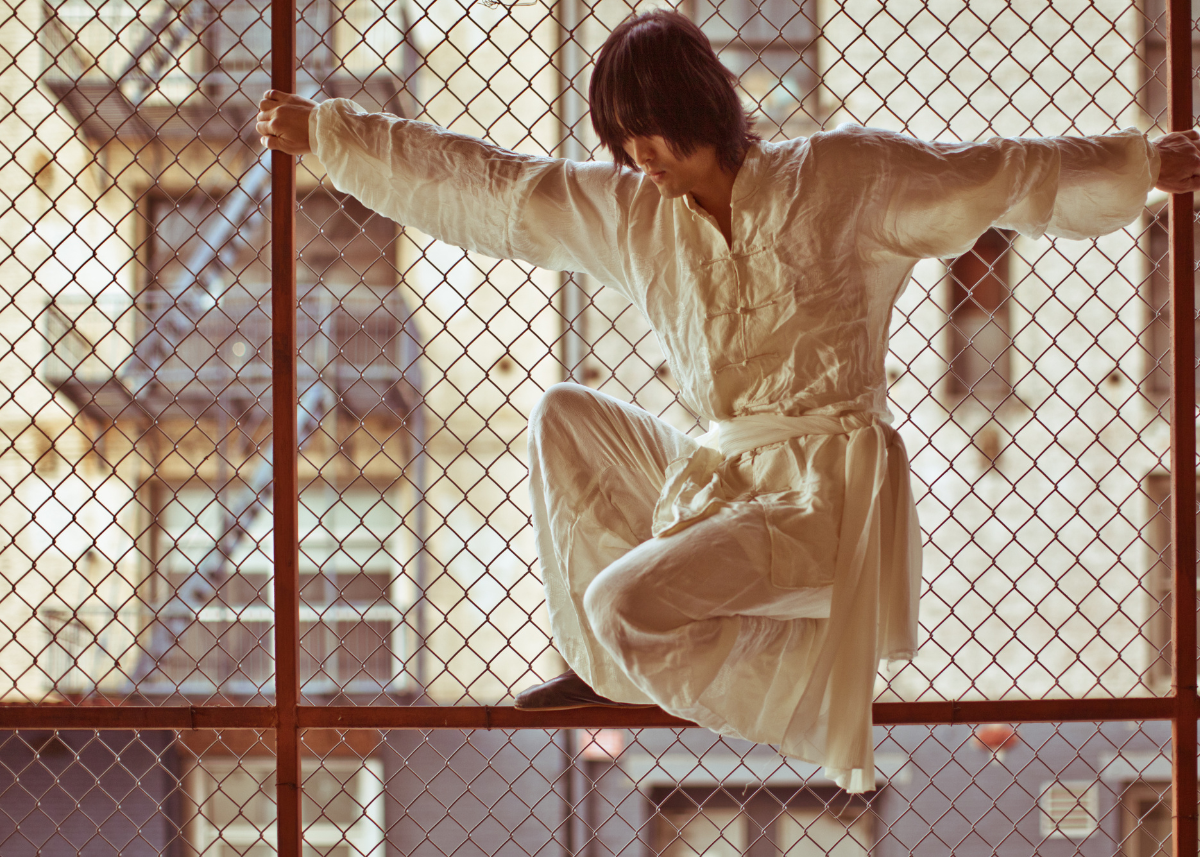
If you ask most people what kung fu is for, they’ll probably say fighting or self-defence. Some may say fitness, or a bit of discipline, for the kids.
These are not wrong answers. But they’re not the real purpose of kung fu, they’re simply the surface. In other words, they are what kung fu looks like before you have trained in it.
The people who stay long enough understand something different.
The question underneath the question
When someone starts training for the first time, they’re often seeking fitness, or to learn to fight. But kung fu often asks questions a student didn’t expect to answer.
Things such as, can you show up on the days you don’t feel like it? Or, can you face something challenging and find out what you’re actually made of?
These are not fighting questions. They’re character questions. And training is where you answer them.
The outer and inner can’t be separated
Traditional Chinese martial arts have always understood this. You cannot train the body without training the mind. You cannot train the mind without shaping the character.
Respect sits at the foundation of any reputable school, and ours is no exception. Respect is what opens doors to genuine knowledge, and in our experience, it has always been the only way to receive knowledge from masters. Without it, a master teaches you the shape of a technique. With it, he might teach you the soul of it.
The other important component is self-discipline, because that’s where the actual work happens. Dune Da, the form taught to the Chinese army for its efficiency and directness, was chosen precisely because it demands this. You show up, you drill it, you refine it. There are no shortcuts in a form built for real application.
These are not additions to martial training. They are martial training.
What the lineage understood
The masters who built these systems weren’t thinking only about how to win a fight. They were thinking about how to build a person.
Master Chia Yan Soon, a fifth-generation lineage holder in the Choy Lay Fut tradition, has seen it directly: traditional kung fu training instilled the values that built good citizens and strong communities. His view is clear. Confident and strong characters matter especially in difficult times. The art produces them. That was always the intention.
This is why traditional schools made leaving very easy. It filtered people in and out, revealing who wanted the art and who wanted only the idea of it.
Sifu George Michielsen walked into his first kwoon at 17, planning to stay three months. He stayed seven years. Not because the training was comfortable, but because it was doing something real, and worth staying for.
The long game
Students who trained under Masters Vince and Dave Lacey in those early years have carried that training into every part of their lives since. Careers, families, how they face difficulty and how they show up. The techniques became instincts and the instincts became character. Jason Lacey, who grew up in that environment, put it plainly: the foundations of Buk Sing gave him body awareness that kept him fit as he aged, while keeping his mind young.
That is the long game of kung fu. Not how hard you can hit. Who you become through the process of learning to hit hard.
One student who trained with Sifu George described it this way: this school offered more than just how to fight. It offered a chance to be part of a fraternity forged for life.
Training online doesn’t change the principle
When you train through our online courses, you bring the same qualities to the screen that a student once brought to the kwoon floor. Nobody holds the horse stance for you. Nobody makes you replay the section until you understand it. Nobody forces you to train with full intent instead of going through the motions.
That responsibility sits with you. And that is precisely the point.
The art transfers the same way it always has, through the student who takes it seriously. The medium changes. The demand does not.
The training is a mirror
Every form you drill, every technique you repeat, every session you push through when motivation runs dry. All of it reflects something back. Where your focus breaks. Where resistance creeps in. Where you perform effort instead of giving it.
Sinew Qigong builds internal strength and mental discipline simultaneously. The Chen Tai Chi system asks for stillness within movement. Each practice, each level, each form calls on you to look honestly at where you are and close the gap.
This is why people who train seriously in kung fu say it changed their life even after they stopped training. The habits of mind it builds do not disappear when you step away from the screen.
What you’re really signing up for
If you are considering starting, or you have just begun, you’re signing up for something most modern pursuits cannot offer: a genuine tradition. A lineage that has been tested by real people across generations and handed down with care and intention.
That tradition asks something in return.
Not that you become a fighter. That you become someone worth teaching.
