
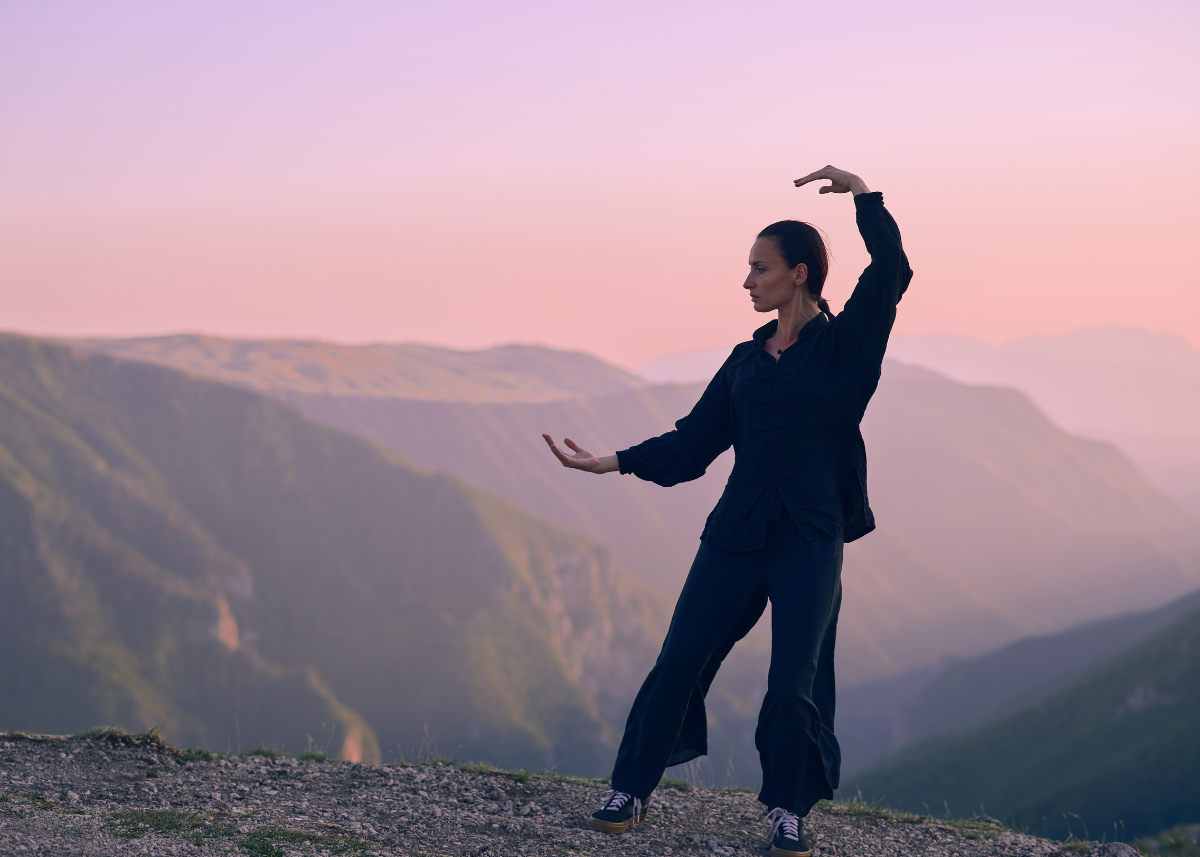
Tai Chi has a bit of a reputation problem. For many people, it conjures images of slow, gentle movement in a park, something for older people, perhaps, but not exactly transformative. It’s one of the persistent misconceptions in the world of movement and health, and it sells the practice short.
The truth is that Tai Chi, particularly Chen Tai Chi in its authentic form, is one of the most complete health practices available to anyone at any age. It builds strength, improves balance, conditions the joints, calms the nervous system, and develops a quality of body awareness that most forms of exercise never touch. The fact that it looks gentle from the outside is part of what makes it so deceptively powerful.
What Chen Tai Chi actually is
Chen Tai Chi is the oldest and most dynamic form of Tai Chi, originating from Chen Village in China. It combines flowing, graceful movement with moments of explosive power, known as fajin, and a continuous spiralling energy called silk-reeling that runs through every technique. It is, at its core, a martial art, designed to develop internal strength, precise body mechanics, and the ability to generate and absorb force efficiently.
But the same qualities that make it effective as a martial art are precisely what make it so valuable as a health practice. The structural alignment it develops protects the joints. The breathing it cultivates calms the nervous system. The whole-body coordination it trains improves balance and posture. And the internal awareness it builds creates a relationship with the body that most people have never experienced.
Joint health and structural resilience
One of the most significant and least discussed benefits of consistent Tai Chi practice is what it does for the joints. The practice strengthens the muscles, tendons, and connective tissue surrounding the joints without the impact and loading that causes so many conventional exercise injuries. It teaches the body to move with structural efficiency, distributing force evenly rather than concentrating it in vulnerable areas.
For people dealing with joint pain, stiffness, or the gradual mobility loss that often accompanies ageing, this is genuinely meaningful. Tai Chi doesn’t force the body through ranges of motion it isn’t ready for. It develops those ranges gradually, sustainably, and with a quality of internal awareness that protects rather than stresses the structures involved.
Balance and coordination
Falls are one of the leading causes of serious injury in older adults, and balance training is one of the most evidence-supported interventions for reducing that risk. Tai Chi develops balance in a way that isolated balance exercises simply can’t replicate, because it trains the whole body to work together as a coordinated, responsive system rather than training individual muscles in isolation.
The slow, deliberate weight shifting that characterises Tai Chi practice builds proprioception, the body’s awareness of its own position in space, and develops the kind of dynamic balance that holds up in real-life situations. Practitioners consistently report feeling more sure-footed, grounded, and confident in their movement as their practice deepens.
The nervous system and stress
Perhaps the most immediately felt benefit of Tai Chi practice is what it does to the nervous system. The combination of slow, intentional movement, deep breathing, and focused internal awareness activates the parasympathetic nervous system, the body’s rest-and-repair function, in a way that many people haven’t experienced before.
Most modern adults carry a level of background tension and low-grade stress that has become so familiar it no longer registers as unusual. Tai Chi makes that tension visible by dissolving it. Practitioners describe leaving sessions feeling genuinely calm rather than simply less stimulated, with a quality of mental clarity and physical ease that carries into the rest of the day.
Practiced consistently, this effect accumulates. The nervous system learns, through repeated experience, that it can be calm and alert at the same time. That baseline shift has real consequences for sleep quality, emotional regulation, energy levels, and overall sense of wellbeing.
A practice that grows with you
One of the most beautiful things about Tai Chi as a health practice is that it genuinely suits every age and every starting point. A complete beginner with no movement background can start today and experience real benefits within weeks. A seasoned athlete will find layers of internal challenge that keep revealing themselves for years. Someone recovering from injury or illness will find it gentle enough to begin immediately and deep enough to support a full return to health.
The five-level Chen Tai Chi program taught online by Sifu George Michielsen is structured specifically to take you from wherever you’re starting, through the foundational principles and structural basics, progressively deeper into the form and the internal practice that gives it its power. Each level builds on the last, and lifetime access means you can move at your own pace and return to refine your understanding as your body develops.
