When people hear the term master, they often think of skill first. Speed, power, precisio and the ability to execute techniques cleanly and confidently. These things matter, and they take years to develop. But if you spend enough time around martial arts, you start to see that skill alone doesn’t define a master.
There are plenty of people who can move well. Far fewer who truly understand what they’re doing.
A true martial arts master embodies something deeper. You feel it in the way they carry themselves, the way they teach, and the way they approach the art. It shows up in everything they do, not just when they demonstrate technique.
Technical excellence is the floor, not the ceiling
For a kung fu master, there is often power without the effort, and techniques that are precise without being mechanical. Decades of refinement have stripped away everything unnecessary, leaving only what works, expressed with a quality that cannot be faked or accelerated.
Grandmaster Kong Hing, one of the highest-ranking Masters of Choy Lay Fut Buk Sing, was described by those who witnessed him as watching a tiger attack. Small-framed, unassuming in stillness, he moved with a quality that left no doubt.
But technical excellence is the starting point for mastery, not the destination. Many people develop exceptional technical skill and stop there. What distinguishes a true master is what they built on top of it.
The willingness to keep being a student
Every genuine master in the lineage connected to the Chinese Kung Fu and Tai Chi Academy spent their life continuing to seek knowledge, not resting on what they had already earned.
Master Sun Xue Zhong, 12th generation inheritor of the Taoist Hunyuan Tai Chi Chuan system, still runs in sub-zero temperatures in the depths of a Shenyang winter. His father, well into his eighties, could hang laterally from a tree without gripping hard. These are not performances. They are the natural expression of a life that never stopped training.
Sifu George Michielsen began his pursuit at 17 and has never stopped. The world of Chinese martial arts is, by design, secretive. Knowledge sits inside families and lineages, guarded behind language barriers, cultural suspicion, and a fierce hierarchy that does not open easily to outsiders, let alone to a Westerner. Gaining access required years of demonstrated respect, sincerity, and patience.
Character is not separate from the art
Master Chia Yan Soon, 5th generation head master of the Hong Seng Gwoon, held a particular view on what traditional martial arts training was actually for. He had seen, across a long career, how genuine Kung Fu practice instilled the values that built good citizens and strong communities. Confident and strong characters, he believed, matter most precisely when times are difficult. The art was never designed only to produce fighters. It was designed to produce people.
This distinction matters because it tells you something about what mastery actually involves. A person who develops extraordinary technique but poor character has developed only half of what the tradition asks of them. The masters who earn genuine respect across decades do so because their character is consistent with their skill. They are the same person in the kwoon as they are everywhere else. Their honesty, their integrity, and their conduct under pressure reflect the same principles they teach.
Master Wong Seng Choong resigned from a career in insurance in 2000 to teach full time, not because it was financially sensible but because his commitment to the art demanded it. He had been teaching since 1979, with his own master’s permission, naming the school in his master’s honour. The art shaped his choices in ways that went well beyond the training floor.
Transmission as responsibility
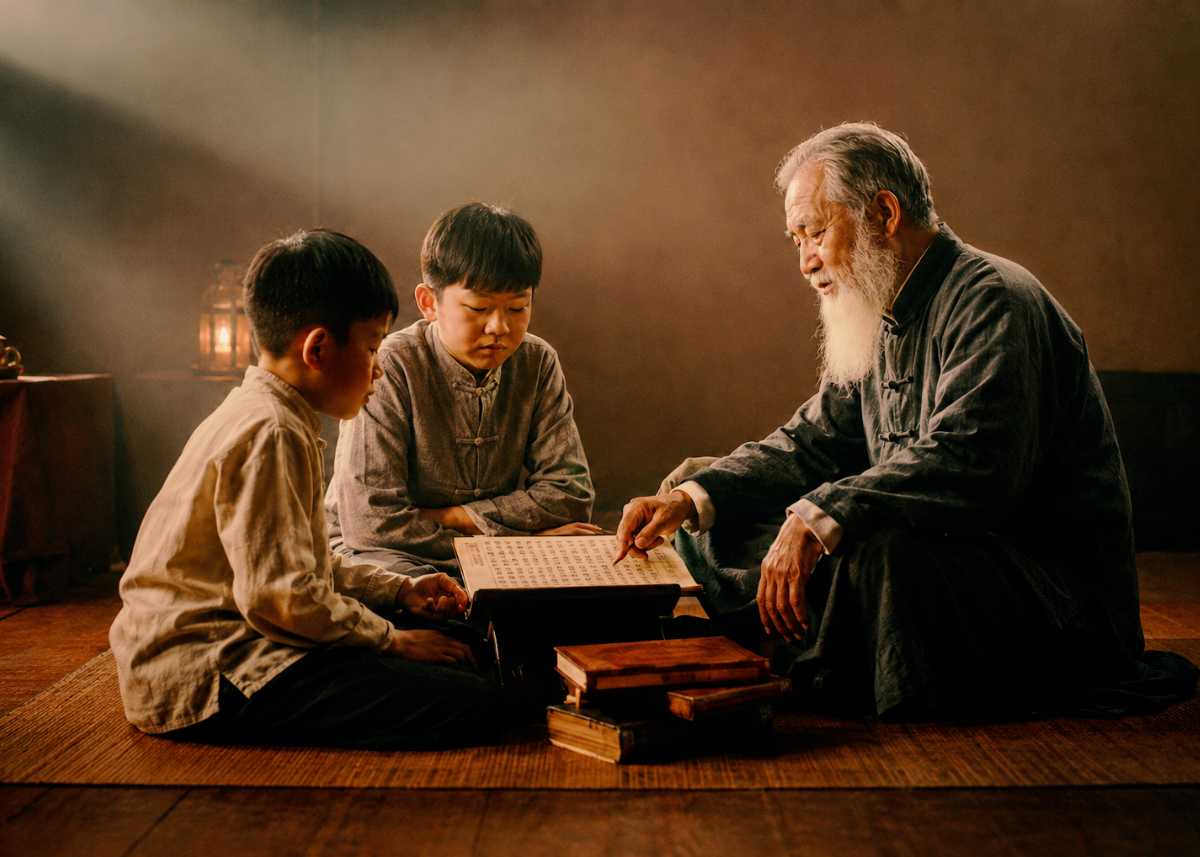
One thing that separates a true master from a talented practitioner is their relationship to what comes after them. A practitioner trains for themselves. A master understands that they are a link in a chain, responsible not only for what they receive but for what they pass on.
This sense of responsibility runs through every significant figure connected to this lineage. Master John K. Saw carries the 18 Lohan Qigong system with the specific charge of ensuring it is taught accurately, represented faithfully, and not diluted for convenience. He began teaching after recovering from liver trouble and a stroke, driven by direct personal experience of the practice’s restorative power. The transmission was not just knowledge to him. It was something worth protecting because it had saved him.
Kong Hing defied his own father’s wishes to pass the Choy Lay Fut Buk Sing system to Vince and Dave Lacey, knowing that the knowledge would otherwise narrow and eventually disappear. That decision, to break with tradition in order to preserve the art rather than protect its exclusivity, was itself an act of mastery. It required a clear understanding of what the knowledge was actually for.
What mastery looks like from the inside
Students who have trained seriously with genuine masters describe a particular experience. The technical instruction is extraordinary, but it is not the most important thing they received. What stays with them is a quality of presence, a clarity about what matters, and an example of how to move through the world with both strength and integrity.
That is what mastery actually transmits. Not just technique. Not just knowledge. But a way of being that the art, practised with complete sincerity over a very long time, quietly produces.
The courses at the Chinese Kung Fu and Tai Chi Academy carry that inheritance. The instruction comes from people who received it whole, from teachers who understood what they were passing on. You cannot replicate that from YouTube. But you can access it, one session at a time, from wherever you are. Explore the courses here.
