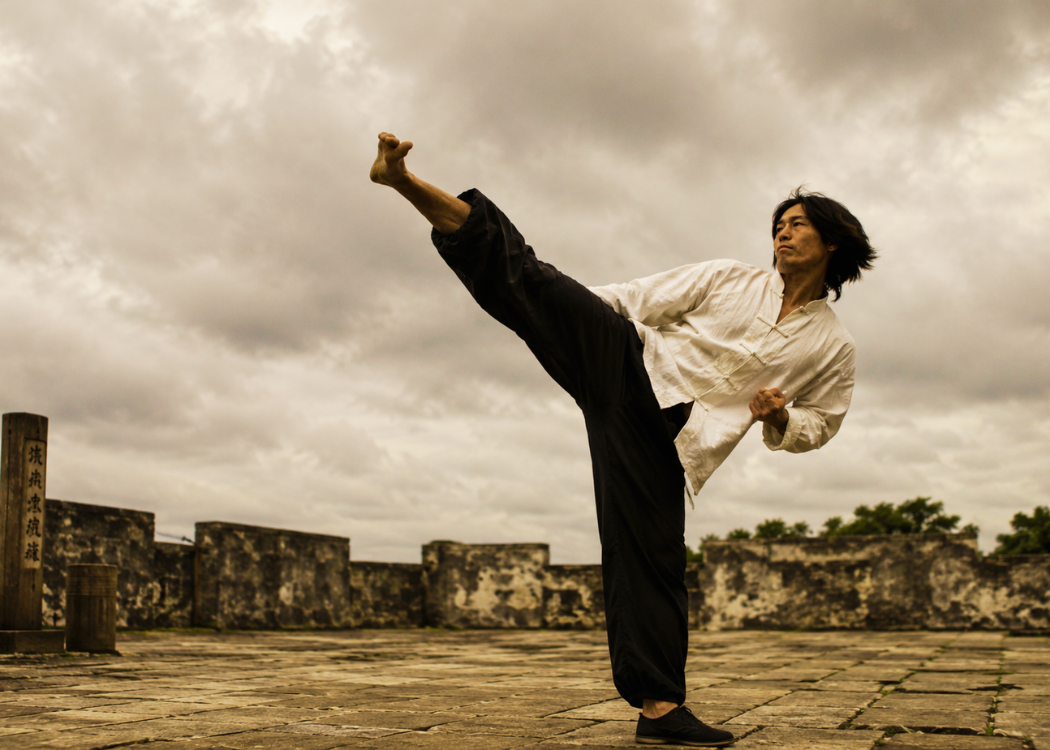
There’s something unmistakable about the old masters. You see it in their posture, hear it in their voice, and feel it in the way they move — calm, composed, and quietly powerful. They didn’t need to shout to command respect, they earned it through presence, discipline, and lived example.
That kind of strength is rare in the modern world. But in the Buk Sing tradition of Choy Lay Fut — the system we teach at the Chinese Kung Fu & Tai Chi Academy — it’s alive and well. Preserved through a lineage of warriors, thinkers, and teachers, this art continues to offer more than technique. It offers a way of being.
Who were the masters of Buk Sing?
The Buk Sing branch of Choy Lay Fut was forged in the real-world testing ground of southern China. Its founder, Grandmaster Tarm Sarm, was known not only for his skill in combat, but for his intensity of training and his unshakable commitment to the art. After being expelled from his original school for defeating senior classmates, he went on to create something unique — a system focused on effectiveness, structure, and long-range power.
From there, the lineage expanded through formidable figures like Kong On, a master of both external strength and internal arts, and Kong Hing, whose iron body training and bone-setting knowledge made him both feared and respected. These were not just fighters. They were men of precision, integrity, and presence.
Our own Sifu, George Michielsen, trained directly under this lineage — spending time with Kong Hing in Hong Kong, learning not just the forms and drills, but the mindset and expectations that come with carrying a tradition. What he brought back to the Academy here in Australia is not just kung fu, it’s a philosophy of training, respect, and transformation.
What made these men warriors?
Their power didn’t come from brute strength or aggression. It came from something deeper — a combination of qualities forged through years of disciplined practice:
- Self-mastery: Training was never about showing off. It was about refining yourself — physically, mentally, and energetically. The goal wasn’t dominance, but control.
- Respect for the art: Every session was approached with seriousness. Salutes weren’t just gestures — they were acknowledgements of lineage, of teachers past, and of the space they were entering.
- Resilience: Many of these men came from difficult circumstances. They weren’t handed comfort — they built strength through effort, repetition, and hardship.
- Purpose and humility: Even the most skilled remained students. There was no room for ego — only for improvement, and for protecting the integrity of the system.
These qualities are what we mean when we talk about “warrior spirit.” It’s not about fighting. It’s about how you show up — for your training, for your life, and for the people around you.
Why this matters today
In a world that often celebrates flash over substance, these values can feel like a relic of the past. But for many, that’s exactly what makes them so valuable.
Kung fu gives people a framework to develop discipline, consistency, and self-respect. The traditions handed down through the Buk Sing lineage are still relevant, not because they’re old, but because they’ve been tested. They’ve lasted. And they work.
For students who train in this system, the effects are often felt far beyond the school. There’s a groundedness that comes from learning under a real lineage. A sense of belonging. A quiet confidence that builds over time, not because you’re being praised, but because you’ve earned it.
Being a warrior doesn’t mean you fight. It means you train. You show up when it’s inconvenient. You hold a standard. You move with purpose and integrity — whether anyone is watching or not.
That’s the legacy we preserve at the Chinese Kung Fu & Tai Chi Academy. Not just techniques, but a way of walking through life. A way of remembering what matters.
Want to know more about the Masters of Buk Sing? Learn about them HERE (ADD LINK)
